Web Applications I've Built.
Fast, conversion-focused web applications built the same way I build campaigns — engineered for performance, not just looks.
Modern Stack
Next.js, React & Tailwind — fast, secure, and built to scale.
Conversion-First
Layouts engineered around the funnel, not just aesthetics.
SEO & Performance
Clean markup, structured data, and Core Web Vitals in mind.
Featured Builds
2 apps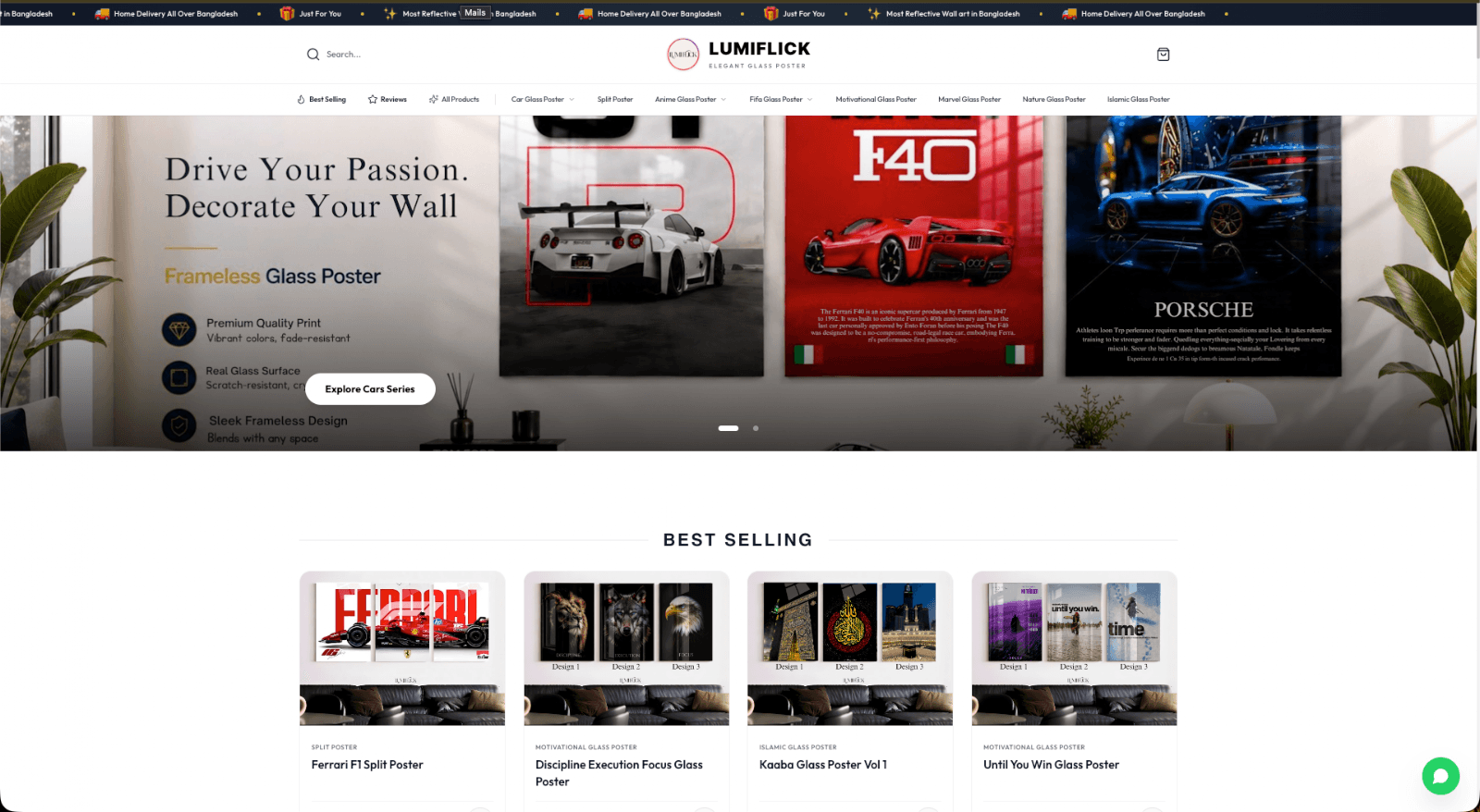
Lumiflick | Glass Poster Brand
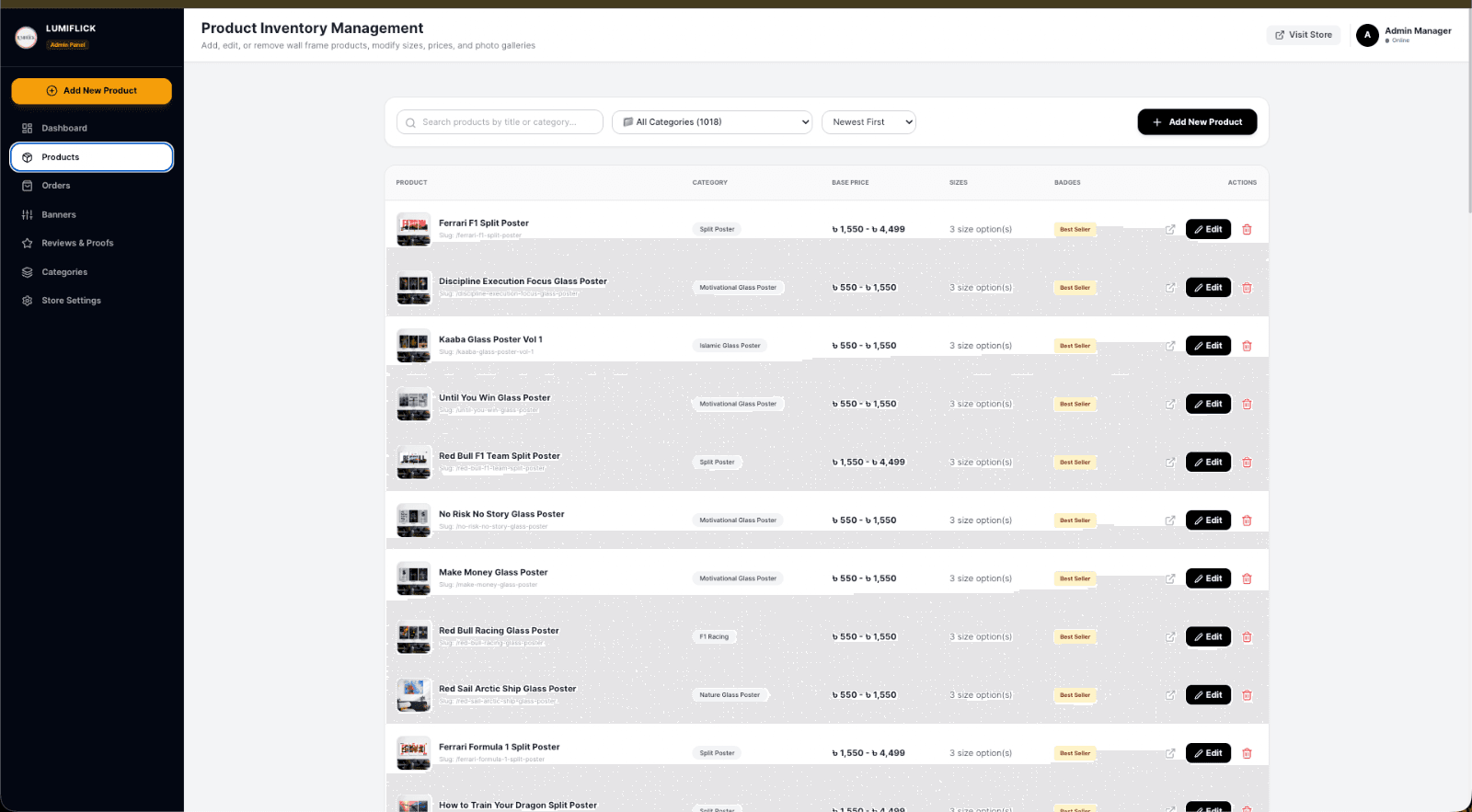
LumiFlick | Premium E-Commerce Platform LumiFlick is a modern full-stack e-commerce platform built for a premium glass poster and wall-art brand. The website was designed around a highly visual shopping experience, combining product discovery, curated collections, detailed product presentation, customer ordering, and a scalable backend architecture. The platform focuses heavily on visual storytelling and premium product positioning, presenting glass posters as modern interior statement pieces rather than conventional printed posters. Technology Stack The platform was developed using a modern full-stack web architecture. Next.js React TypeScript Prisma Node.js Tailwind CSS Framer Motion The architecture connects the frontend experience with server-side functionality and a structured database layer, creating a complete foundation for operating the e-commerce business. Premium Product Experience LumiFlick's storefront is designed around the visual nature of its products. The interface puts artwork and product presentation at the center of the customer journey, allowing visitors to explore different designs and collections while communicating the premium characteristics of the glass poster products. The overall experience is built to make the products feel like premium interior decor rather than ordinary wall posters. Product Catalog The platform includes a structured product catalog that allows products to be organized into different collections and categories. Major product collections include: Anime Glass Posters Car Glass Posters FIFA Glass Posters Islamic Glass Posters Motivational Glass Posters Nature Glass Posters All Glass Posters This category-driven structure makes product discovery easier for customers while providing a scalable foundation for expanding the catalog. Product Presentation The product pages are designed to communicate both the visual appeal and physical characteristics of the products. The platform highlights key product attributes such as real glass construction, vivid colors, high-definition finishing, waterproof properties, scratch resistance, and frameless presentation. This creates a product experience focused on perceived value rather than simply displaying an image, title, and price. E-Commerce Architecture LumiFlick was developed as a functional e-commerce system rather than a static marketing website. The application connects the storefront with backend functionality and database-driven product and commerce data. This architecture allows the platform to support the core requirements of an online retail operation while providing room for additional functionality as the business grows. Database Integration Prisma is used as the database ORM, providing a structured interface between the application and its database. This allows important commerce entities and application data to be managed through a consistent backend architecture instead of relying on hardcoded content. The database-driven approach also makes the platform easier to maintain and extend as the product catalog and order volume increase. Customer Shopping Journey The website is structured around a clear customer journey. Customers can discover products through the homepage and collections, browse specific categories, view individual products, evaluate product information, and proceed through the purchasing process. The experience is designed to minimize unnecessary friction between product discovery and purchase. Visual Brand Experience A major focus of the project was creating a premium visual identity around the LumiFlick brand. The design language emphasizes clean layouts, large product imagery, modern typography, whitespace, and carefully structured content sections. Instead of treating the website as a traditional product catalog, the interface uses visual presentation to establish the product's premium positioning. Responsive Design The frontend was developed to provide a responsive experience across desktop, tablet, and mobile devices. The layouts, product grids, navigation, content sections, and interactive components are structured to adapt to different screen sizes while maintaining the visual hierarchy of the storefront. Interactive Experience React provides the foundation for interactive storefront components, while Framer Motion is used for smooth transitions and motion-based interactions where appropriate. These interactions help make the browsing experience feel more dynamic without compromising the primary objective of the website, which is product discovery and conversion. Scalable Store Architecture The platform was built with scalability in mind. Rather than creating a collection of static pages for individual products, the system uses structured application and database architecture that can support additional products, categories, content, and future commerce functionality. This provides LumiFlick with a foundation that can evolve alongside the business. Business-Focused Development The project combines three major layers: Premium brand presentation E-commerce functionality Scalable full-stack infrastructure The result is a platform that is not simply visually attractive but also structured around the operational requirements of an online product business. Overall Project LumiFlick is a full-stack e-commerce platform built with Next.js, React, Prisma, TypeScript, Node.js, Tailwind CSS, and Framer Motion. The project combines a visually focused storefront with a database-backed application architecture to create a modern shopping experience for premium glass posters. From product discovery and category organization to product presentation and online purchasing, the platform provides a complete digital commerce foundation for the LumiFlick brand.
Kanzie | Imported Toy Brand
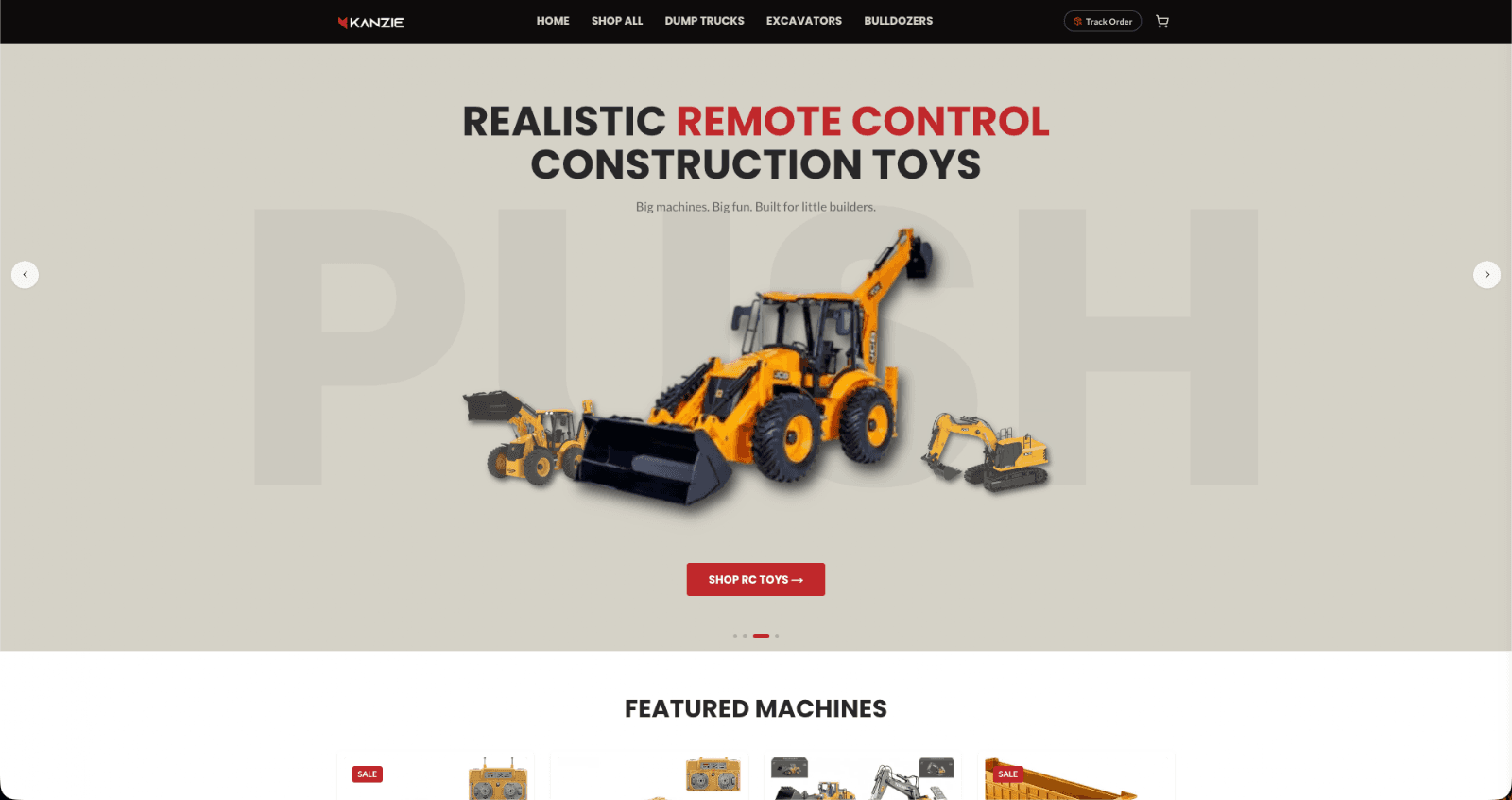
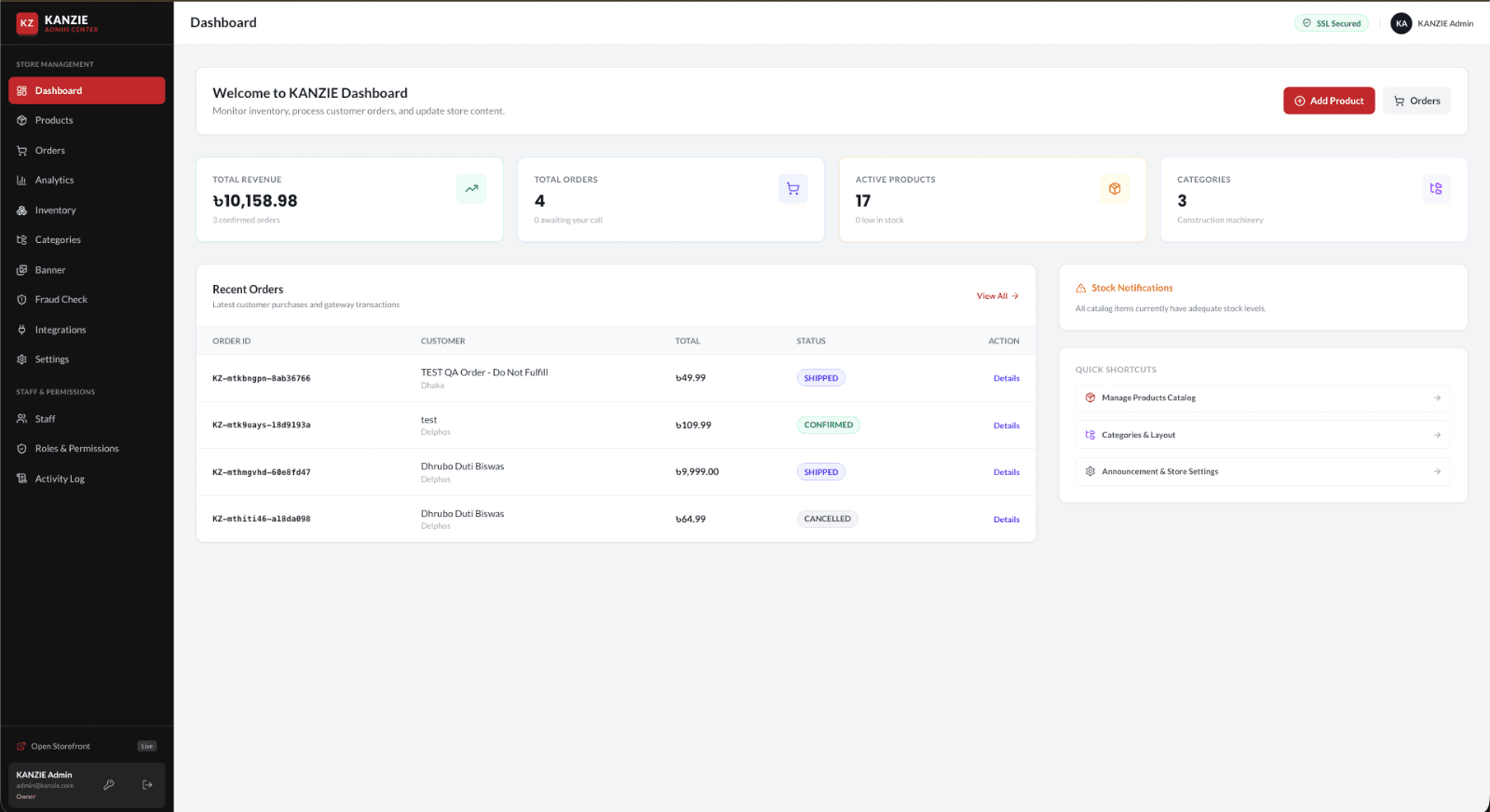
Kanzie | Full-Stack E-Commerce Platform Kanzie is a custom-built, full-stack e-commerce platform designed to manage the complete online retail operation from a single system. The project combines a modern customer-facing storefront with a dedicated administration platform for managing products, orders, inventory, categories, content, analytics, staff, permissions, and day-to-day business operations. Technology Stack The platform is built using a modern full-stack JavaScript architecture. Next.js React TypeScript Tailwind CSS Node.js Prisma Framer Motion The architecture allows the storefront, backend logic, database operations, and administration system to operate as one integrated platform. Customer-Facing Storefront The public-facing website provides customers with a modern shopping experience focused on product discovery and conversion. The storefront is structured around a scalable product catalog, organized categories, product presentation, and a streamlined purchasing journey. The system is designed so that changes made through the administration panel can flow into the storefront without requiring developers to manually edit frontend code. Custom Admin Center A major component of the project is the custom-built Kanzie Admin Center. The admin panel provides centralized control over the entire commerce operation rather than functioning as a basic content-management interface. The dashboard gives administrators an immediate overview of the business through key operational metrics. Total Revenue Total Orders Active Products Categories Recent Orders Stock Notifications Quick Administrative Actions The dashboard is structured around three priorities: understanding business performance, monitoring current operations, and accessing frequently used workflows. Product Management The product management system provides centralized control over the complete product catalog. Administrators can manage product information, organization, inventory-related data, and product presentation from the administration interface. The structured catalog architecture allows the store to scale beyond a small number of products while keeping product information consistent across the platform. Order Management The platform includes a dedicated order management workflow for handling customer purchases from the administration panel. Administrators can review orders and access important information including customer details, order value, location, order status, and individual order information. The system supports operational order states such as: Pending Confirmed Processing Shipped Delivered Cancelled Returned This turns order management into an operational workflow rather than simply displaying database records. Inventory Management Inventory is handled as a dedicated part of the commerce system. The administration dashboard provides visibility into stock conditions and includes stock notifications so that administrators can identify products requiring attention. This creates a foundation for maintaining accurate product availability and reducing fulfillment problems caused by insufficient inventory. Categories & Catalog Structure The platform includes dedicated category management for organizing the product catalog. Administrators can maintain the store's product taxonomy and structure products into logical categories. The category system is also connected with the storefront layout, allowing the business to maintain a more organized shopping experience as the catalog expands. Banner & Store Content The admin panel includes a dedicated Banner management section for controlling promotional and visual content on the storefront. This allows marketing and promotional changes to be handled from the administration system rather than requiring source-code changes for every campaign. The platform also provides store-level settings for managing broader storefront configuration. Analytics A dedicated analytics section provides business-level visibility beyond the basic dashboard statistics. The analytics architecture is intended to help administrators understand sales performance, order activity, revenue trends, and other operational metrics. This creates a separation between day-to-day store management and higher-level business analysis. Fraud Check The platform includes a dedicated Fraud Check module for reviewing potentially problematic transactions. This introduces an additional operational control layer to the ordering process and gives administrators a structured place to evaluate transaction risk. Integrations The Integrations section provides a centralized architecture for connecting external services with the commerce platform. Keeping integrations separate from the core application logic makes the system easier to extend as the business adds additional payment, marketing, analytics, communication, shipping, or other third-party services. Staff Management The platform supports multiple administrative users through a dedicated Staff management system. Instead of requiring everyone to use a single administrator account, staff members can be managed independently. This provides a stronger foundation for running the store as a team and allows responsibilities to be distributed across different users. Roles & Permissions The administration system includes role-based access control through a dedicated Roles & Permissions architecture. Different administrative users can be granted different levels of access depending on their responsibilities. For example, a catalog manager may require access to products and inventory without requiring access to sensitive financial information. This creates a more controlled and scalable administrative environment. Activity Log The Activity Log provides an audit layer for administrative operations. It allows the system to maintain visibility into actions performed within the administration environment, which becomes increasingly important when multiple staff members have access to the platform. This improves accountability and provides a useful operational history when investigating changes or unexpected activity. Security & Access Control Security is incorporated into the architecture through controlled administrative access and permission-based functionality. The admin interface separates general store management from staff and permission management, creating a clearer security boundary between operational activities and administrative configuration. Sensitive functionality can also be restricted according to assigned permissions rather than being universally available to every staff account. Scalable Architecture Kanzie was designed as a commerce platform rather than a static e-commerce website. The architecture separates major business domains such as products, orders, inventory, customers, analytics, staff, permissions, and store configuration. This makes the system easier to extend as the business grows and creates a foundation for adding additional commerce functionality without rebuilding the platform from scratch. Overall Project Kanzie combines a customer-facing e-commerce experience with a complete internal commerce operations system. The result is a centralized platform where the business can manage its catalog, process customer orders, monitor inventory, analyze performance, manage storefront content, review transactions, control staff access, and maintain an operational audit trail. The project demonstrates full-stack development across both the customer experience and the business infrastructure behind the store. Custom e-commerce storefront Full administration dashboard Product catalog management Order management Inventory management Category management Banner and content management Analytics Fraud checking Integrations Store settings Staff management Role-based permissions Activity logging Responsive modern UI Scalable full-stack architecture
Companies I've Worked With







Ready to Stop Guessing and Start Scaling?
Book a free 30-minute discovery call. No pitch, no pressure — just a real conversation about your growth potential.
No commitment required. 30-min call. Response within 24 hours.